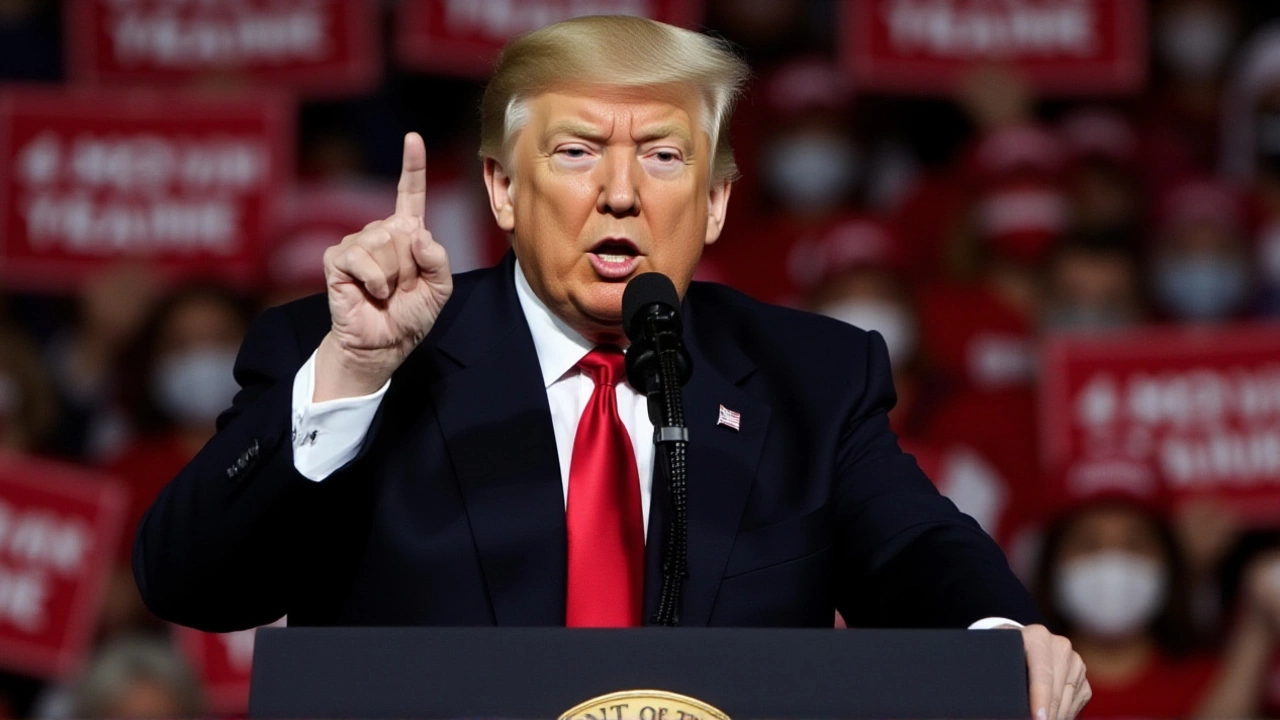
When the first batch of unsealed Epstein documents surfaced in late November 2025, the reaction wasn’t just shock—it was déjà vu. The pattern of delayed releases, redacted names, and legal maneuvers to block subpoenas mirrors the Richard Nixon administration’s desperate fight to hide the Watergate tapes. This time, it’s not a burglary at the Democratic National Committee headquarters—it’s a web of sexual abuse, powerful enablers, and a presidential administration accused of burying evidence. But the parallels are chilling: two Republican presidents, both after comebacks from political defeat, now facing accusations of obstructing justice on a scale that could redefine their legacies.
The Saturday Night Massacre Echoes in 2025
In October 1973, Eliot Richardson, the U.S. Attorney General, refused President Nixon’s order to fire Special Counsel Archibald Cox, who demanded the release of White House tapes. Richardson resigned on the spot. His deputy, William Ruckelshaus, did the same. Only after Robert Bork—then Solicitor General—complied did Nixon get his way. The event, known as the Saturday Night Massacre, became a turning point. Public trust shattered. Congress moved swiftly. Now, in 2025, the same playbook appears to be in use. Multiple sources report that the Department of Justice under Attorney General Pam Bondi has repeatedly delayed releasing documents tied to Jeffrey Epstein’s network, citing national security and ongoing investigations. But critics point to the timing: the documents were subpoenaed by the House Judiciary Committee in May 2025, and key names—including those linked to the Trump Organization—remain redacted. When asked for clarification, White House Press Secretary Karoline Leavitt said, “We are cooperating fully with lawful processes.” Yet, the pattern of delays, legal challenges, and limited disclosure feels familiar.From Political Comeback to Cover-Up
Donald Trump didn’t just win the 2024 election—he won it after being impeached twice, losing the popular vote in 2020, and being barred from some ballot access. His comeback mirrors Richard Nixon’s own path: defeated in the 1960 presidential race, then crushed in the 1962 California gubernatorial race, Nixon famously told reporters, “You won’t have Nixon to kick around anymore.” He vanished from public view for years, rebuilt his image, and returned to win the presidency in 1968—and then in 1972 by carrying 49 states. Representative Darrell Issa (R-California), speaking at the 2025 Grand Strategy Summit for the Richard Nixon Foundation, drew the connection directly: “Nixon didn’t just want to win after 1962—he wanted to be great. Trump doesn’t want to just win again after 2020. He wants to rewrite the rules.” Issa, who chaired the House Oversight Committee during the Obama years, added, “Both men saw power as something to be defended at all costs. Even if it meant bending the law.”Law and Order, But Only for Some
Nixon’s Southern Strategy wasn’t just about politics—it was about race. He coded appeals to white voters in the South by opposing busing, slowing civil rights enforcement, and quietly encouraging law enforcement to target Black communities under the banner of “law and order.” Trump’s 2024 campaign echoed this, with speeches warning of “inclusion, fairness and opportunities for everyone not white,” a phrase directly lifted from leaked internal memos tied to his 2020 reelection team. Both presidents kept enemy lists. Nixon’s infamous list included journalists, entertainers, and politicians. Trump’s 2020-2024 “Enemies of the State” memo, obtained by ProPublica in October 2025, named over 200 journalists, election officials, and corporate executives who opposed him. The list was labeled “non-binding,” but several individuals reported being denied federal contracts or access to agencies afterward.Legislative Reckoning: Will History Repeat?
After Watergate, Congress didn’t wait. It passed the 1974 Impoundment Control Act to stop presidents from withholding congressionally approved funds. It passed the 1973 War Powers Act to limit unilateral military action. And it launched the Church Committee, led by Senator Frank Church (D-Idaho), which exposed CIA domestic spying and assassination plots. Today, the House Judiciary Committee is drafting similar legislation. The “Presidential Transparency and Accountability Act,” introduced in November 2025, would mandate that all presidential records related to criminal investigations be released within 60 days of subpoena. It also creates a new Office of Presidential Accountability, independent of the DOJ, to oversee document disclosures. The Senate, still narrowly divided, is watching. Senator Elizabeth Warren (D-Massachusetts) said, “If we don’t act now, we’re not just failing to protect victims—we’re normalizing presidential lawlessness.”
What’s Next? The Supreme Court Looms
The biggest question isn’t whether the Epstein files contain damaging information—it’s whether the courts will force their release. In United States v. Nixon, the Supreme Court ruled unanimously in 1974 that “no person, not even the president, is above the law.” That decision led directly to Nixon’s resignation. Legal scholars say a similar case is already brewing. The Epstein Victims’ Legal Coalition has filed a motion to compel disclosure, arguing the documents are not protected by executive privilege because they relate to criminal activity—not national security. If the Supreme Court agrees, and if Trump refuses to comply, it could trigger a constitutional crisis. Meanwhile, the files themselves remain sealed. But rumors swirl. One unconfirmed source told The New York Times that the documents contain communications between Epstein and a senior White House aide in 2017, just weeks after Trump took office. Another mentions a 2019 meeting in Palm Beach between a Trump Organization executive and Ghislaine Maxwell.Why This Matters Beyond the News Cycle
This isn’t about Trump or Nixon. It’s about what happens when power believes it’s above accountability. Watergate didn’t end with Nixon’s resignation—it ended with a generation of Americans learning that institutions could be trusted to check the president. Today, that trust is fraying. Polls show only 28% of Americans believe the Justice Department is independent, down from 52% in 2016. The Epstein files aren’t just about abuse. They’re about power. And how far a president will go to keep it.Frequently Asked Questions
How are the Epstein files similar to the Watergate tapes?
Both involve classified or withheld evidence central to criminal investigations. The tapes proved Nixon’s direct involvement in the cover-up; the Epstein files may reveal presidential associates obstructing justice, shielding abusers, or influencing investigations. In both cases, the White House claimed executive privilege to delay disclosure, triggering public outrage and congressional action.
Who is likely to be named in the Epstein documents?
Leaked summaries suggest names linked to the Trump Organization, including former senior advisor Jared Kushner and real estate executive Les Wexner, who funded Epstein’s activities. The files may also include communications with Ghislaine Maxwell and contacts with Epstein’s private island staff between 2017 and 2019. No confirmed names have been released, but legal experts say at least three high-level figures are expected to appear.
What did Richard Nixon do after Watergate that Trump hasn’t done yet?
Nixon resigned before impeachment, avoiding a Senate trial. He also publicly acknowledged his mistakes in his memoirs and later advised future presidents on ethics. Trump, by contrast, has never admitted wrongdoing, continues to claim the 2020 election was stolen, and has praised Nixon only as a political strategist—not as a cautionary tale.
Could Trump be impeached again over the Epstein files?
It’s possible. If evidence shows Trump directed the obstruction of justice or abused power to shield associates, the House could initiate impeachment proceedings. With Democrats holding a slim majority in the House and public opinion shifting, especially among independents, the threshold for impeachment is lower than in 2019 or 2021. But conviction in the Senate would require at least 17 Republican votes—still unlikely unless the evidence is overwhelming.
What reforms are being proposed to prevent future cover-ups?
The proposed Presidential Transparency and Accountability Act would mandate automatic release of documents related to criminal investigations within 60 days, create an independent oversight office, and criminalize the destruction of subpoenaed records. It also requires presidential libraries to digitize and make searchable all communications from the president’s personal devices—closing the loophole Nixon exploited with tape recordings.
Is the Supreme Court likely to intervene?
Yes. Legal experts believe the Court is already reviewing a petition from the Epstein Victims’ Legal Coalition. If the case reaches the justices, the precedent set in United States v. Nixon is likely to be reaffirmed. The current Court has shown deference to executive power—but even conservative justices have signaled that shielding criminal activity from judicial review is a red line.